
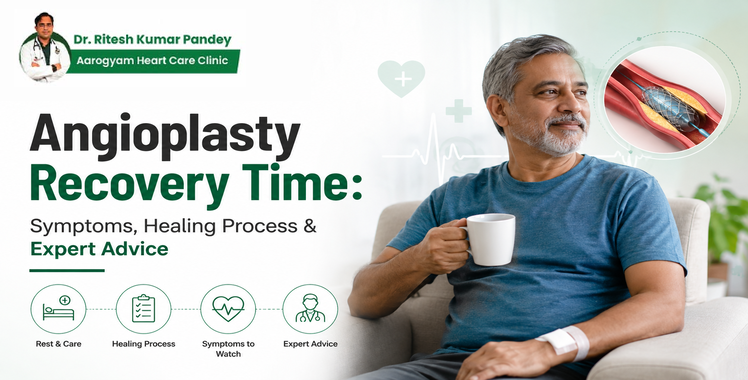
Angioplasty Recovery Time: Symptoms, Healing Process & Expert Advice
If you've just had an angioplasty, chances are the first thing on your mind is "when will I feel like myself again?" There's no single answer to that. Angioplasty recovery time looks different for everyone, and it comes down to things like whether a stent was placed, how the procedure went, your general health, and whether this was planned in advance or done urgently during a heart attack.
Most people who go through an uncomplicated angioplasty ease back into their normal routine over a few weeks, but the exact pace really should come from your cardiologist, not a blog post or a friend who "had the same thing." Knowing roughly what lies ahead, though, takes a lot of the anxiety out of it, and helps you tell the difference between a symptom that's just part of healing and one that needs a phone call.
What Is the Usual Angioplasty Recovery Time?
Ask ten cardiologists this question and you'll get ten slightly different answers, because angioplasty recovery time genuinely varies from one patient to the next. Someone healthy going in for a planned procedure tends to bounce back faster than someone who came out of an emergency angioplasty after a heart attack.
Here's a rough sketch of how those first days and weeks tend to unfold:
|
Recovery stage |
What you may experience |
|
First 24 hours |
Monitoring, rest, and close attention to the catheter site |
|
First few days |
Slowly moving around, light daily activities |
|
First week |
Easing back into your routine, as your doctor advises |
|
Following weeks |
Building activity back up, with an eye on long-term heart health |
Your own restrictions might look nothing like this table, depending on how complex your procedure was. And that's fine — the point isn't to hit some universal recovery checkpoint. It's to heal properly, without rushing things.
Angioplasty Recovery Time After Stent Placement
A lot of angioplasties involve a stent — a small mesh tube that props the artery open once it's been widened. Angioplasty recovery time after stent placement depends on things like how many arteries were treated and how straightforward (or not) the procedure turned out to be.
Once the stent is in, some soreness or bruising near the catheter site is pretty normal. Your cardiologist will also send you home with medication meant to lower your risk of complications, and this part matters more than it might seem — taking these exactly as prescribed is genuinely one of the biggest factors in how smoothly you recover.
Don't stop or adjust your heart medicines on your own just because you're feeling better. That decision belongs to your doctor.
Recovery After Angioplasty: What Happens During the Healing Process?
Recovery after angioplasty doesn't happen all at once — it unfolds in stages.
First 24 Hours
Expect your heart rhythm, blood pressure, and catheter site to be watched closely. Some patients go home the same day; others stay for observation, depending on the procedure and how they're doing.
First Few Days
Light activity usually starts here, guided by your doctor's specific instructions. Feeling more tired than usual is common, especially if a heart attack brought you to the hospital in the first place.
Try not to overdo it just because one day feels good. Recovery isn't linear.
First Few Weeks
As strength comes back, your cardiologist may start guiding you toward a bit more activity at a time. Follow-up visits — and cardiac rehab, if it's recommended — go a long way toward making that return safer.
Symptoms You May Experience During Angioplasty Recovery
A little bruising or tenderness around the catheter site is normal while you heal. But not everything you feel afterward should be brushed off as "just part of recovery."
Contact a Doctor If You Notice:
-
New or worsening chest pain
-
Significant shortness of breath
-
Fainting or unusual weakness
-
Heavy or ongoing bleeding from the catheter site
-
Swelling that keeps increasing near the insertion point
-
Redness, warmth, or other signs of infection
-
Any symptom that seems to be getting worse instead of better
If you're dealing with severe chest pain, trouble breathing, or anything that feels like an emergency, don't wait for your next appointment — get medical help right away.
How Much Rest Is Needed After Angioplasty?
Rest matters in the early days, but lying still for weeks on end isn't the goal for most people either. Once your doctor gives the go-ahead, light movement — and gradually, more of it — usually becomes part of the plan. Walking often fits in early on, though how much and how soon depends entirely on your case.
For the first few days, skip strenuous exercise and heavy lifting unless your cardiologist has specifically told you it's okay.
Recovery Time After Angioplasty Surgery: When Can You Return to Normal Activities?
People searching for recovery time after angioplasty are usually really asking one thing: when can I go back to living normally? Again, it depends on you.
Walking — Light walking can often begin once your doctor clears it. Build up gradually rather than trying to pick up right where you left off.
Driving — Your doctor is the one who can tell you when it's safe, based on your procedure and how you're recovering.
Returning to Work — If your job is mostly desk-based, you'll likely be back sooner than someone doing physically demanding work. Ask your cardiologist for guidance specific to your situation.
Exercise — Physical activity matters for long-term heart health, but it needs to be built up slowly. Cardiac rehabilitation can be a genuinely helpful, structured way to regain strength and confidence without overdoing it.
Diet After Angioplasty: What Should You Eat?
Eating well is a real part of life after angioplasty — not a two-week fix, but an ongoing habit. Diet after angioplasty should center on what actually supports your heart long-term, not a quick crash diet.
Lean toward:
-
Vegetables and fruits
-
Whole grains
-
Beans and other good protein sources
-
Healthy fats, in reasonable amounts
-
Fresh, minimally processed food
Go easy on salt, saturated and trans fat, heavily processed food, and added sugar.
If you're also managing diabetes, high blood pressure, or high cholesterol, your ideal diet may look a bit different — worth a conversation with your doctor or a dietitian.
Angioplasty Aftercare: Medicines, Follow-Up and Lifestyle Changes
Angioplasty aftercare isn't something that wraps up after the first week.
Take your medicines as prescribed. After a stent, medication that lowers your risk of blood clots and other complications is typically part of the plan. Never stop taking these without talking to your cardiologist first.
Show up for follow-up appointments. These visits let your doctor track your recovery, review your medications, and catch new symptoms before they become bigger problems.
Look after your heart long-term. That means keeping blood pressure and cholesterol in check, managing diabetes if you have it, staying at a healthy weight, steering clear of tobacco, and staying active in the way your doctor recommends.
Cardiac rehabilitation can help a lot of patients ease back into activity while building habits that stick.
What Can Affect Your Angioplasty Recovery Period?
Your angioplasty recovery period isn't shaped by the procedure alone. A few things that play into it:
-
Overall health and fitness
-
Age
-
How severe the coronary artery disease was
-
How many arteries were treated, and how complex the case was
-
Whether a stent was placed
-
Whether the procedure followed a heart attack
-
Other existing health conditions
-
How closely you stick to your medications
-
Lifestyle and activity level
All of which is to say: someone else's recovery timeline isn't yours. Comparing the two rarely helps and often just adds stress.
When Should You Contact a Cardiologist After Angioplasty?
Recovery should generally get a little easier as time passes. If something feels new, severe, or is getting worse rather than better, don't sit on it — call your cardiologist.
Chest discomfort, breathing trouble, unusual bleeding, or growing swelling around the catheter site all deserve prompt attention. Anything that feels like an emergency needs to be treated as one.
When in doubt, it's always better to ask than to assume a symptom is "just recovery."
Expert Advice From Dr. Ritesh Kumar Pandey
No two patients recover the same way. Dr. Ritesh Kumar Pandey, a cardiologist in Lucknow, looks at each patient's heart condition, the details of their procedure, their symptoms, and their overall health before giving advice on activity, medication, follow-up, and long-term cardiac care.
The best approach is to follow the recovery plan built for your situation, rather than measuring your progress against someone else's story.
If you have questions about your recovery, follow-up care, or anything you're noticing after your procedure, talking to your cardiologist is the way to get answers that actually apply to you.
FAQs
1. How long does it take to recover from angioplasty?
It depends on the procedure and your health going in. Many people return to normal life gradually after an uncomplicated, planned angioplasty, while recovery after an emergency procedure or heart attack tends to take longer.
2. How much rest is needed after angioplasty?
It varies. Early rest matters, followed by a gradual return to light activity once your doctor says it's safe. Hold off on anything strenuous until you're cleared.
3. What is the angioplasty recovery time after stent placement?
This depends on the procedure itself, your overall health, and whether any complications came up. Your cardiologist can give you a timeline that actually fits your case.
4. When can I walk normally after angioplasty?
Usually gradually, once your doctor says it's appropriate. They'll guide both when to start and how quickly to build up.
5. What should I eat after angioplasty?
Aim for a heart-healthy pattern — vegetables, fruits, whole grains, good protein sources, healthy fats — while cutting back on excess salt and processed food.
Final Thoughts
There's no fixed angioplasty recovery time that applies to everyone. Some people are back on their feet quickly after a planned procedure; others, especially after a heart attack or a more complex intervention, need more time — and that's completely normal.
The safest path forward is simple, even if it isn't always easy: follow your cardiologist's instructions, take your medicines as prescribed, build up activity gradually, and don't skip follow-up visits. If something feels off, don't wait it out — get it checked.
With the right aftercare and some patience with long-term heart-healthy habits, recovery can end up being a real turning point for your cardiovascular health. If you'd like personalized guidance on your recovery or follow-up care, you can contact Dr. Ritesh Kumar Pandey for an appointment.